


Comparison of Basalt Fiber with Polypropylene and Steel: Which Option to Choose for a Project
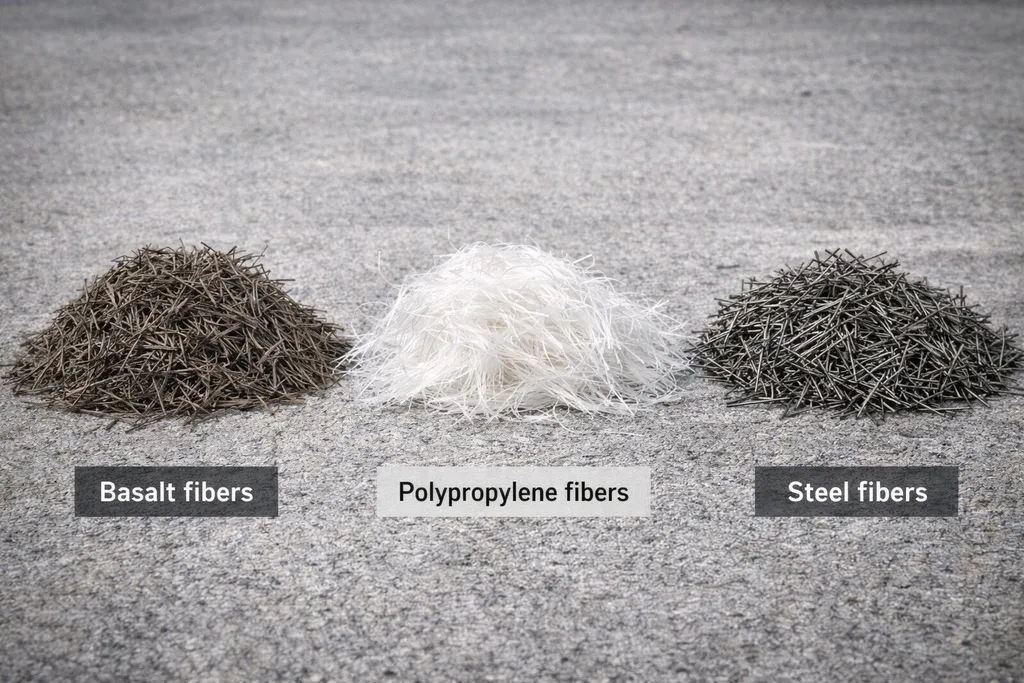
In modern construction, dispersed reinforcement is increasingly used to improve the reliability of concrete structures without complicating the technology. For this reason, basalt fiber is considered an effective alternative to traditional solutions. At the same time, polypropylene fiber and the well-known steel fiber are still widely applied on the market. Understanding the differences between these materials helps select the optimal option for specific operating conditions and project requirements.
Main properties and features of fiber for concrete
Any fiber for concrete performs the function of micro-reinforcement, evenly distributing within the concrete mass. It reduces the risk of shrinkage and thermal cracking and improves structural behavior under dynamic loads. The influence of additives on crack resistance is especially important, as microcracks are the primary cause of premature deterioration. In the long term, this directly affects the durability of concrete structures.
Before making a choice, it is important to consider the key parameters that determine additive efficiency:
- Mechanical strength and the ability to withstand tensile forces.
- Uniform distribution within the concrete mix without clumping.
- Compatibility with existing reinforcement technologies and placement methods.
Physical and performance characteristics depend on the nature of the base fiber, its length in millimeters, and its shape. Fiber is introduced into reinforced concrete elements at the mixing stage, forming a homogeneous composition. Choosing the right option requires understanding how the material behaves in an alkaline environment and under load. Practical experience and laboratory studies show that different fiber types deliver different results.
Advantages of basalt fiber over polypropylene and steel
Compared to alternatives, the advantages of basalt fiber become particularly evident in aggressive operating environments. It is not subject to rusting, providing corrosion resistance throughout its service life. Unlike metallic additives, basalt fibers do not generate internal stresses during temperature fluctuations. This makes them a stable base for structures with increased reliability requirements.
Compared with synthetic counterparts, basalt solutions have a higher modulus of elasticity. They perform better in crack control and retain their properties under elevated temperatures. In addition, this construction approach reduces the risk of defects on the surface and within the concrete mass.
Application areas and effectiveness of different fiber types
In practice, the use of basalt fiber is justified in industrial floors, road slabs, and elements exposed to cyclic loads. Polypropylene additives are more often used to control early shrinkage where high load-bearing capacity is not required. Steel fibers are effective under significant loads but increase structural weight and complicate concrete handling.
The main application areas can be classified as follows:
- Industrial and infrastructure facilities with intensive loads.
- Thin-walled elements and slabs requiring uniform distribution.
- Structures where minimal impact on placement technology is important.
Comparison of concrete fibers shows that there is no universal solution. Each method has its own optimal application area depending on the purpose of the facility and operating conditions. Proper selection makes it possible to increase structural service life without excessive budget overruns.
How to choose fiber for a specific project and where to buy it
When making a decision, it is important to determine in advance how to choose fiber for a project, taking into account loads, environmental conditions, and economic factors. It is necessary to evaluate not only the price per kilogram but also efficiency over the service life. Production processes and quality control of supplied raw materials also matter. A reliable supplier provides technical specifications and dosage recommendations.
The Basalt Uzbekistan group of companies specializes in manufacturing products from natural raw materials and offers solutions with predictable properties. For major developers and private clients, the question of where to buy basalt fiber directly from the manufacturer is crucial, as it guarantees consistent quality and full technical support at all stages of construction.