


Basalt Fiber for Industrial Floors and Road Surfaces
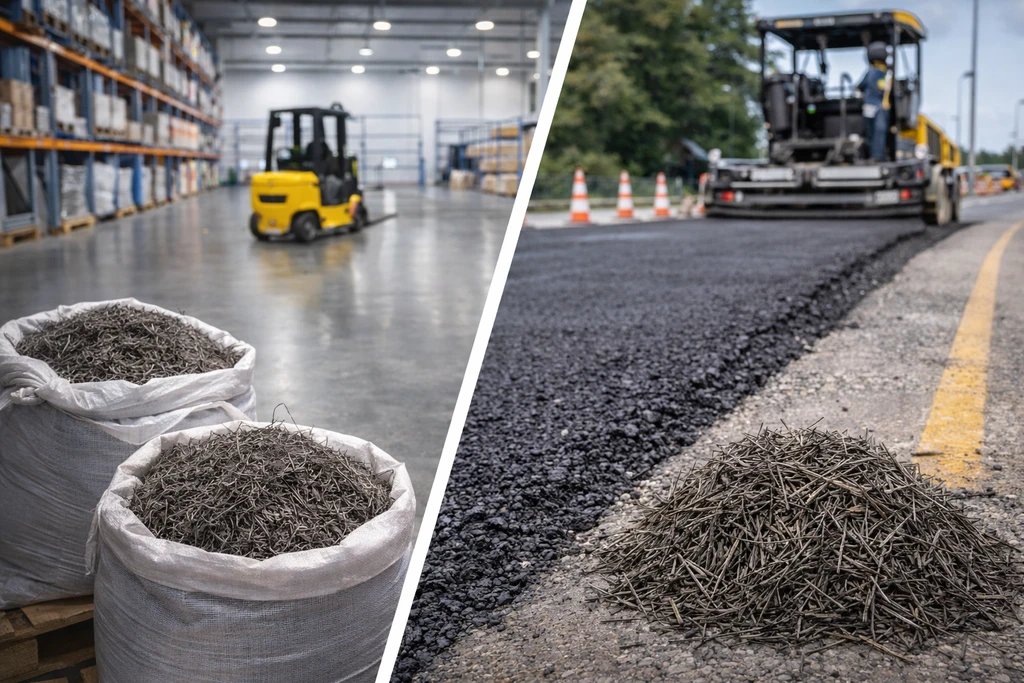
Modern concrete structures impose increasing requirements for reliability and long-term performance. This is why basalt fiber is increasingly viewed as a high-tech alternative to traditional reinforcement methods. It distributes loads evenly throughout the concrete mass and improves resistance to cracking. Concrete fiber reinforcement becomes a critical element wherever stable strength and predictable material behavior are required over the entire service life.
Properties of Basalt Fiber and Its Impact on Concrete Structures
Basalt fiber is a dispersed reinforcing component introduced directly into the concrete mix. Each filament forms a spatial micro-mesh that absorbs tensile stresses. The mechanical properties of basalt fiber ensure uniform load redistribution and reduce internal deformation. As a result, concrete demonstrates improved plasticity in early curing stages and a stable structure after strength development.
Reinforcing concrete with basalt fiber provides comprehensive benefits to performance characteristics. The material does not react chemically with cement stone and maintains its parameters under temperature fluctuations. Research and practical testing confirm reduced microcrack risks and increased wear resistance under heavy operational loads.
Advantages Over Steel and Polypropylene Fibers
Compared to traditional reinforcement, basalt fiber offers significant advantages. Unlike steel reinforcement, it does not corrode and does not increase structure weight. Compared to polypropylene materials, basalt roving retains its properties under high temperatures and aggressive conditions. This composite approach enhances reliability without complicating installation technology.
Basalt fiber for industrial floors is also economically beneficial. It disperses evenly within the mix, preventing local stress zones. Practical applications confirm reduced maintenance and repair costs throughout the service cycle.
Application Areas: From Industrial Floors to Road Surfaces
The widespread use of basalt fibers is driven by their versatility. The material is effectively used in warehouse floors, production facilities, and logistics terminals. The most common application areas include:
- industrial floors with high-intensity machinery movement;
- parking lots and ramp foundations;
- road construction and outdoor platforms;
- airfield and railway platforms;
- monolithic infrastructure elements.
Basalt additives are also used in road surfacing, where the base is exposed to dynamic loads and temperature variations. Under such conditions, basalt fiber contributes to long-term structural durability.
How to Choose the Right Fiber for Concrete
Selecting the reinforcement component requires considering project conditions and operational modes. Choosing the right fiber depends on concrete grade, loading, and environmental factors. Before making a decision, it is recommended to evaluate:
- design loads and type of structure;
- curing and operating conditions;
- crack-resistance requirements;
- economic efficiency;
- manufacturer recommendations.
The key parameters include fiber length, dosage, and compatibility with the mixing process. These factors directly affect the final characteristics of concrete.
Where to Buy Basalt Fiber and What to Consider
When selecting a supplier, it is important to consider experience and technological capabilities. Reliable production guarantees stable quality and compliance with declared specifications. Customers often ask where to buy basalt fiber in Tashkent with verified parameters and documentation. Purchasing directly from the manufacturer simplifies logistics and ensures consistent control.
When planning to buy basalt fiber, attention should be paid to delivery terms, certificate availability, and technical support. This approach ensures predictable performance and long-term durability of concrete structures for industrial and road projects.